









EMPLOYEE SPOTLIGHT: DR. EUGENE HERRMANN, VICE PRESIDENT, BEHAVOIRIAL HEALTH SERVICES
Dr. Gene Herrmann, Vice President of Behavioral Health, was presented recently with the American Board of Correctional Psychology’s People Helping People Award by Dr. Dean Aufderheide, who is the founder of the ABCP and the Director of Mental Health for American Correctional Association. The award is given annually by the ABCP to individuals based on their exemplary service and contributions to Correctional Mental Health.
Over the past year, The GEO Group, Inc. recorded more than 200,000 mental-health encounters across our facilities ranging from psychotherapy sessions to medication-management visits. This volume underscores both the magnitude of need and our organization’s enduring commitment to providing structured, accountable, compassionate, and competent care pathways from intake through reentry.
Today, jails and prisons serve as “de facto” psychiatric hospitals, housing far more people with mental health conditions than any other public institution. According to the National Institute of Mental Health, about 1 in 5 adults in the general population experiences a mental illness annually, and 1 in 20 lives with a serious mental illness. Inside correctional facilities, those numbers rise sharply. Approximately 37% of individuals in state prisons and 44% in local jails meet diagnostic criteria for mental disorders. This reality highlights the ethical and operational imperative to deliver high-quality, evidence-based mental-health care behind the walls.
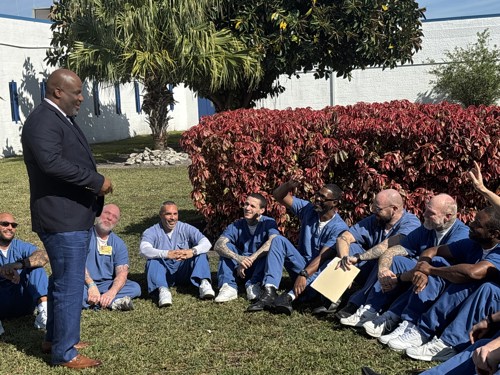
At GEO, our mental health workforce embodies his responsibility and mission. Our dedicated team of psychiatrists, psychiatric nurse practitioners, psychologists, and Master’s-level therapists collaborate to deliver both psychotherapy and pharmacological treatment. Beyond clinical care, several of our facilities offer innovative therapeutic programs such as South Bay Correctional and Rehabilitation Facility’s horticulture initiative and Blackwater River Correctional and Rehabilitation Facility’s K9 training program, where residents
train Labrador puppies to become service animals for individuals with disabilities. Additionally, many facilities maintain dedicated housing units for military veteran offenders, acknowledging their unique mental-health and reintegration needs.
Our approach begins at the front door with universal mental-health screening at intake, followed by periodic re-evaluation to ensure timely detection of new or evolving needs. Those individuals identified at risk receive rapid referral for further assessment and, when indicated, suicide prevention interventions. We integrate cognitive behavioral and trauma-informed psychotherapies with guideline-based medication management to address both common and severe conditions, including depression, anxiety, PTSD, schizophrenia, and bipolar disorder. Recognizing the high prevalence of co-occurring substance-use disorders, GEO facilities also provide medications for addiction treatment and relapse-prevention counseling as essential and critical components of care.
To maintain excellence and accountability, GEO applies Continuous Quality Improvement processes including leveraging data to refine care delivery, enhance staff training, and strengthen environmental safeguards. Our tiered observation policies, suicide-prevention protocols, and post incident review mechanisms, such as applying root cause analysis, demonstrate our commitment to both patient safety and staff well-being.
The correctional population often presents with higher clinical acuity cases, compounded by trauma histories, substance use, and social-determinant challenges such as housing instability or limited access to primary care. Addressing these intersecting factors requires trauma-informed awareness, evidence-based models that uphold dignity, promote healing, and reduce recidivism.